
Toggle sidebar
Hazards from fires and explosions
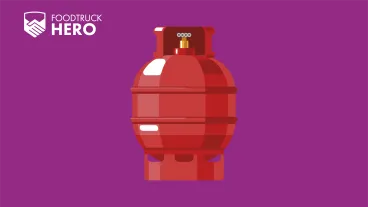
Transport of liquefied gas cylinders
Particular care must be taken when handling liquefied petroleum gas cylinders to prevent accidents and the risk of explosion.This training course demonstrates how safe transport, correct storage and compliance with all regulations ensure that liquefied petroleum gas can be used safely.
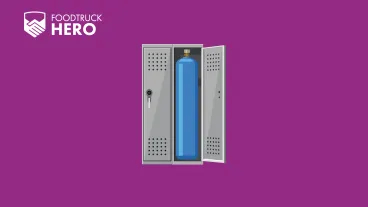
Storage and use of LPG cylinders
It should be noted that the safe handling of liquefied petroleum gas in catering stalls requires proper storage, adequate ventilation and training for staff. In addition, care must be taken to ensure that suitable fire-extinguishing agents are available to minimise the risk of fires and explosions. The following measures must be observed to ensure proper storage:When storing solid mixtures, liquids and gases, care must be taken to ensure adequate ventilation and that the location is protected from direct sunlight.Liquefied gas cylinders and cartridges should, where possible, be stored outdoors in a lockable cage or liquefied gas cabinet made of non-combustible material. This must be secured against unauthorised access and labelled with the prescribed hazard symbols.There must be no sources of ignition, heat or flammable substances in the vicinity, and the smoking ban must be observed.Hazard zones relating to the installation of LPG cabinets must be assessed and defined by the organiser’s safety officer. Where necessary, zones must be defined and additional protective measures taken. If liquefied petroleum gas is stored indoors, additional requirements apply. These should be specified by the organiser’s safety officer as required.Due to the hazards posed by liquefied petroleum gas, the handling of LPG cylinders is restricted to trained personnel only. It is important to ensure that the valves on all gas cylinders are always securely closed, as the cylinders are never completely empty.Each cylinder must be fitted with a protective cap and stored in an upright position, secured to prevent it from falling over. Suitable fire-extinguishing equipment must be available at every catering stall, including a foam fire extinguisher with at least six extinguishing units and a grease fire extinguisher where deep-fat fryers are in use.Staff must be trained in the use of fire extinguishers so that, in an emergency, they can react safely and quickly and tackle a fire at its onset.
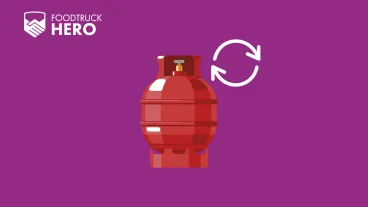
Replacement of LPG cylinders
When handling liquefied petroleum gas, the operating instructions must be followed and liquefied petroleum gas consumption systems must be inspected and documented on a regular basis.The following measures must be observed to ensure the cylinders are changed correctly:When changing liquefied petroleum gas cylinders, the operating instructions – which must be available at the workplace – must always be followed.For every portable liquefied petroleum gas appliance, a two-yearly inspection must be carried out by a qualified person and documented with an inspection certificate. Liquefied petroleum gas appliances may not be operated on the festival site without an inspection certificate. The responsible safety officers – e.g. the organiser’s safety specialists – must shut down the appliances or prohibit their use on site if they discover that an inspection certificate is missing.The organiser may request that the operators send a copy of the relevant inspection records for the portable liquefied petroleum gas appliances to be used in advance, to ensure that only inspected liquefied petroleum gas appliances are used.Staff training must include a practical test on the liquefied petroleum gas consumption systems and must be documented – annually for permanent staff, and upon recruitment for new staff entrusted with this task.The person in charge on site must select a number of employees who are technically qualified to change liquefied petroleum gas cylinders, and must not assign this task to unskilled assistants or unreliable individuals. When changing LPG cylinders, empty pressurised gas cylinders must be replaced with full ones. When changing and connecting cylinders, ensure that smoking is prohibited and that a sufficient distance is maintained from ignition sources such as electrical distribution boards, multi-socket sockets or open flames. First, the top valve of the empty gas cylinder is turned off (clockwise).The valves should not be tightened using a pipe wrench, as this could damage the rubber seal. To avoid this risk, a special mini-tool can be used.Although a pressure gauge is not strictly necessary, a hose rupture safety device is required for hoses longer than 40 cm; this may also be integrated into the pressure regulator. To protect the valve, the valve lock nut and valve cap should always be fitted.Next, the pressure regulator – possibly fitted with a pressure gauge – is removed from the cylinder by turning it anti-clockwise (turn clockwise). The protective cap should then be removed from the full gas cylinder. The smaller protective cap on the side must be unscrewed first before the pressure regulator is attached to the cylinder by turning it anti-clockwise.Once the cylinder has been connected, a leak test must also be carried out. To do this, open the cylinder valve and use a leak detection spray or foam spray. If bubbles appear on the pipe or at the connections, there is a leak. The LPG cylinder must be closed again immediately.The connections must then be checked again for leaks or incorrect assembly. A further leak test must then be carried out. If this test is again unsuccessful, the person in charge must take the liquefied petroleum gas consumption system out of service until the faults have been professionally rectified and the system can operate without leaks once more.Faults in the supply equipment, such as the LPG hose, pressure regulator and/or portable LPG consumption systems, must be reported immediately to the site manager or contractor and the equipment must be taken out of service.Due to the risk of explosion, repairs to liquefied petroleum gas appliances and to damaged parts of the system must only be carried out by qualified personnel.The top valve of the full gas cylinder can now be opened, and the replacement is complete.The portable liquefied petroleum gas appliances should then be supplied with liquefied petroleum gas again. To ensure the safe use of liquefied petroleum gas cylinders, care must be taken to ensure that the cylinder size and pressure regulator are always correctly matched. Pressure regulators with an integrated overpressure safety device and a thermal shut-off device are mandatory for indoor use.It is important to note that indoor pressure regulators may also be used outdoors, whilst outdoor pressure regulators are not permitted indoors.Current practice at events regarding the management of cylinder quantities stipulates that, where one cylinder is connected, one spare cylinder may be kept in the LPG cabinet behind the pagodas; if two cylinders are connected, a further spare cylinder is required; if three cylinders are connected, two spare cylinders (50% rule = 1.5, rounded up to 2) may be kept on hand. These quantities of liquefied petroleum gas cylinders must not be exceeded in the infield behind the tents, in the pagodas’ cylinder cupboards or in the food trucks.All additional liquefied gas cylinders must be handed in at the central store and only collected on site when required. Finally, the LPG cupboards used to store spare cylinders behind the pagodas may only be refilled from the organiser’s central LPG store outside of operating hours. Further information can be found in DGUV Rule 110-010. A further note for everyone on site: should a fire break out in the vicinity of the liquefied petroleum gas cylinders, an emergency call must be made immediately; in the case of small, incipient fires, the fire extinguishers provided must be used to tackle the fire without putting oneself in danger. Other staff should not put themselves in immediate danger, but should, if necessary, instruct neighbouring stallholders and visitors to evacuate the area until the fire brigade has extinguished the fire and the organiser has authorised the area to be re-entered.
Transport von Flüssiggasflaschen
Beim Umgang mit Flüssiggasflaschen ist besondere Vorsicht geboten, um Unfälle und Explosionsgefahren zu verhindern.In dieser Schulung wird gezeigt, wie der sichere Transport, die korrekte Lagerung und die Einhaltung aller Vorschriften dafür sorgen, dass Flüssiggas sicher genutzt werden kann.