
Toggle sidebar
Hazards due to special physical effects
Noise
Prolonged exposure to noise poses a significant health risk that must not be underestimated.This training course covers measures to minimise noise, the use of hearing protection and the importance of rest breaks and preventive medical check-ups to protect employees’ health.
Non-ionising (optical) radiation (UV radiation)
Exposure to the sun and UV radiation poses a significant health risk to festival staff.This training course covers measures to protect against sunburn and skin conditions, such as UV-protective clothing, the correct use of sun cream, and the importance of taking breaks in the shade and staying well-hydrated.
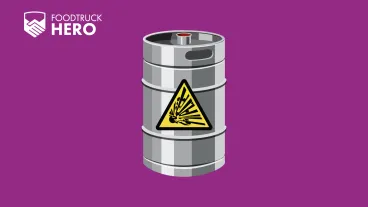
Physical hazards
At festival events, drinks are often delivered and stored in kegs. As space in the storage areas is limited, kegs are often left outside the storage areas, behind outdoor stalls. This poses a risk that intense sunlight will increase the pressure inside the kegs or pressurised gas cylinders, which can cause them to burst or explode. There is also a risk if instructions are not followed when connecting or changing pressurised gas cylinders. Incorrect adjustment of pressure regulators can also pose significant risks. Beverage kegs and pressurised gas cylinders must always be stored in such a way that they are not exposed to direct sunlight. Other sources of heat, such as radiant heaters, should also be kept at a safe distance. Ideally, they should be stored in a lockable beverage storage trolley or container. It is also important to follow the guidelines for the ‘Safe Operation of Beverage Dispensing Systems’ to ensure the safe use of such systems.
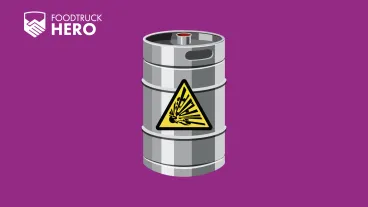
Physikalische Gefährdungen
Bei Festivalveranstaltungen werden Getränke oft in Fässern geliefert und gelagert. Da der Platz in den Lagern begrenzt ist, werden Fässer oft außerhalb der Lager, hinter Verkaufsständen im Freien, abgestellt. Dabei besteht die Gefahr, dass intensive Sonneneinstrahlung den Druck in den Fässern oder Druckgasflaschen erhöht, was zu Bersten oder Platzen führen kann. Zusätzlich besteht eine Gefahr, wenn Anweisungen beim Anschluss oder Wechsel von Druckgasflaschen nicht beachtet werden. Auch das falsche Einstellen von Druckreglern kann erhebliche Risiken mit sich bringen. Getränkefässer und Druckgasflaschen müssen immer so gelagert werden, dass sie nicht direkter Sonneneinstrahlung ausgesetzt sind. Auch andere Hitzequellen, wie Heizstrahler, sollten in sicherem Abstand gehalten werden. Ideal ist die Lagerung in einem abschließbaren Getränkelagerwagen oder Container. Wichtig ist außerdem, die Richtlinien für den „Sicheren Betrieb von Getränkeschankanlagen“ zu beachten, um die sichere Benutzung von Schankanlagen zu gewährleisten.